Business planning used to mean static documents updated once a year. Today, AI transforms it into a dynamic, living process—continuously informed by real-time data, predictive analytics, and market intelligence. Whether you’re crafting a startup pitch, an annual operating plan, or a 5-year strategy, AI helps you plan smarter, adapt faster, and execute with confidence. Here’s how to integrate AI into every phase of business planning.
1. Conduct Smarter Market & Competitive Research
AI accelerates environmental scanning so you don’t miss critical shifts:
- Market trend detection: Tools like Crayon, Exploding Topics, or Google Trends + AI analyze news, patents, and social data to spot emerging opportunities (e.g., “Demand for reusable packaging up 180% in EU”).
- Competitor intelligence: AI tracks competitors’ pricing, hiring, product launches, and messaging in real time—revealing gaps and threats.
- Customer need mapping: Use NLP (Natural Language Processing) to analyze reviews, surveys, and support tickets for unmet demands.
Result: Your plan is grounded in reality—not assumptions.

2. Build Data-Driven Financial Forecasts
Replace guesswork with AI-powered projections:
- Revenue forecasting: Platforms like Paddle, Float, or Microsoft Dynamics 365 use historical data + market signals to predict sales with 85%+ accuracy.
- Scenario modeling: Test “What if?” questions instantly:
- “What if we raise prices by 10%?”
- “What if supply costs increase 20%?”
- “What if we enter the German market?”
- Cash flow simulation: AI models show best/worst-case liquidity scenarios—so you plan for contingencies.
Example:
AI forecast shows Q4 cash shortfall → team secures line of credit early → avoids operational disruption.
3. Optimize Resource Allocation & Capacity Planning
AI ensures your plan matches your people and budget:
- Staffing needs: Predict hiring requirements based on project pipeline, seasonality, and growth targets.
- Budget prioritization: AI analyzes past ROI by initiative (e.g., “Content marketing drove 3x more leads than paid ads”) to guide spend.
- Risk-aware planning: Flag dependencies (e.g., “Key vendor has 40% delay risk”) and suggest buffers.
This turns your plan from aspirational to executable.
4. Generate & Refine Strategic Narratives
Use AI to draft and stress-test your plan:
- Outline creation: Prompt AI: “Generate a 12-month go-to-market plan for a sustainable skincare brand targeting Gen Z.”
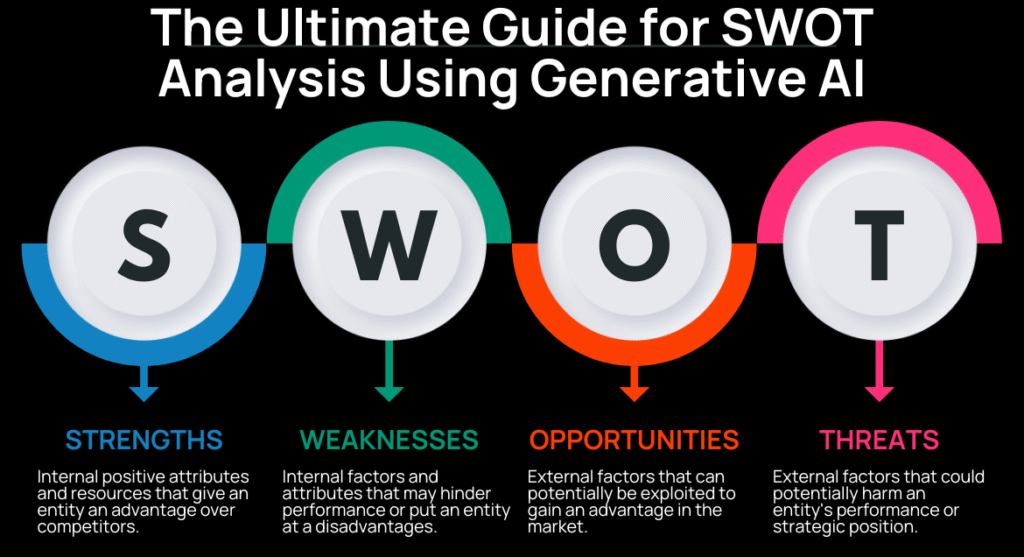
- SWOT analysis: AI scans industry reports and news to suggest strengths, weaknesses, opportunities, and threats.
- Executive summary drafting: Tools like Microsoft Copilot or Notion AI turn bullet points into polished narratives.
Pro tip: Always refine AI output with human insight—AI informs, but you own the vision.
5. Monitor & Adapt in Real Time
The best plans evolve. AI keeps yours alive:
- KPI dashboards (in Power BI, Tableau) auto-alert when metrics deviate from plan.
- Sentiment tracking: Monitor employee and customer feedback to gauge alignment with strategic direction.
- Automated plan updates: Some tools (like Anaplan) suggest revisions when market conditions shift.
This closes the loop between planning and execution.
FAQs
Q: Do I need a data science team to use AI in planning?
A: No. Tools like Notion AI, Microsoft Copilot, Crayon, and Float are designed for planners—not coders. Start with one tool that solves your biggest bottleneck.
Q: Can AI replace human judgment in strategy?
A: Never. AI provides data and options; humans provide purpose, ethics, and long-term vision. Use AI as a co-pilot—not the pilot.
Q: What’s the fastest way to get started?
A: Pick one planning task:
- Research? → Try Exploding Topics
- Forecasting? → Try Float
- Drafting? → Try Notion AI
Start small, prove value, then scale.
AI doesn’t write your business plan—but it makes it sharper, faster, and more resilient. By turning data into foresight and assumptions into tested hypotheses, AI empowers leaders to navigate uncertainty with confidence. The future of business planning isn’t static—it’s adaptive, intelligent, and continuously learning. Start today, and let AI help you build a plan that doesn’t just sit on a shelf—but drives real results.